


For years, public health programs have worked to create smoke-free zones in public places such as restaurants, bars, malls, airplanes, and offices. Smokers are at an increased risk of lung cancer, heart disease, and much more—and secondhand smoke can be similarly harmful to nonsmoking bystanders.
For co-workers of smokers, the creation of smoke-free workplaces has been an important step toward limiting secondhand smoke. Such smoke-free policies have been the work of public health professionals who once may have been public health majors looking to get a college degree that makes a difference. Learn more about the benefits of smoke-free workplaces, and how you can help more spaces go smoke-free when you earn your Bachelor of Science degree in public health.
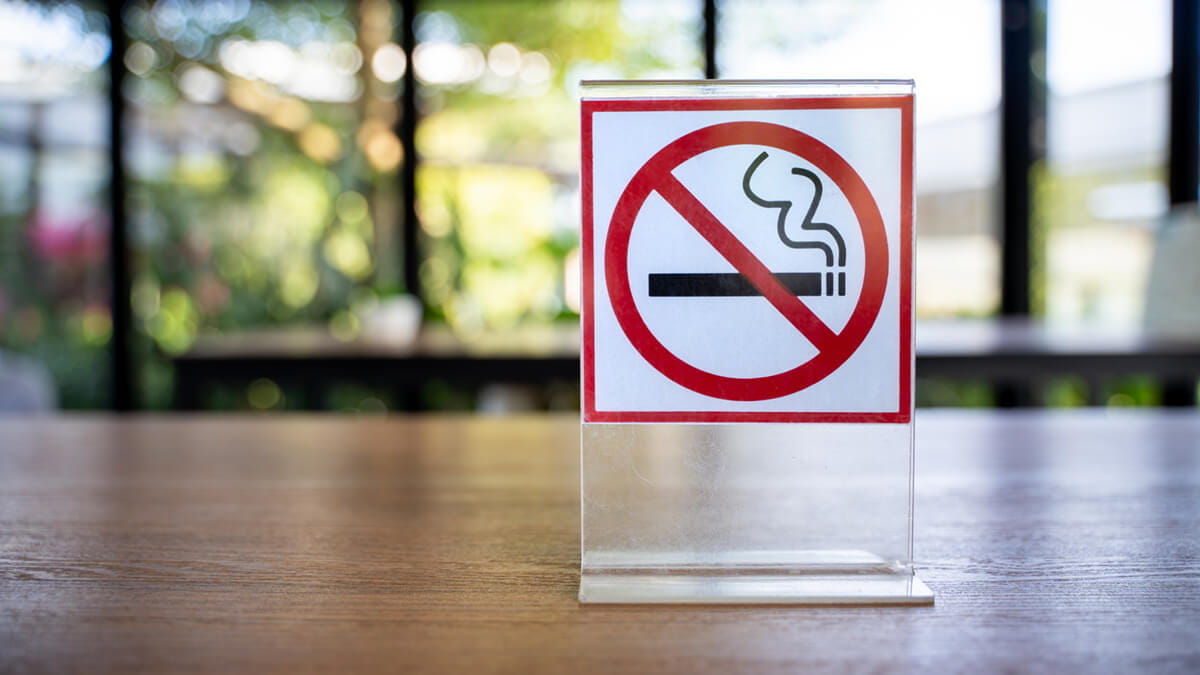
Why Is Secondhand Smoke So Bad?
If you’re not a smoker, then cigarettes can’t hurt you, right? Not quite. Environmental tobacco smoke, or secondhand smoke, comes from the smoke exhaled from the smoker as well as the smoke emitted from the lit end of a cigarette. There are no safe levels of secondhand smoke,1 which can cause various forms of cancer and heart disease. Secondhand smoke can put children at risk for lung infections, ear infections, asthma attacks, and even some forms of cancer.
Secondhand Smoke in the Workplace
According to the Occupational Safety and Health Administration (OSHA) and the National Institute for Occupational Safety and Health (NIOSH), two federal agencies tasked with workplace health and safety, there are no known safe levels of secondhand smoke in a place of work. Policies requiring smoke-free workplaces are the only way to prevent exposure to secondhand smoke at work.
Public health programs have long promoted 100% smoke-free workplaces. According to the U.S. Centers for Disease Control and Prevention, these policies have helped smokers and nonsmokers alike,2 and are even great for employers. The benefits of banning smoking in the workplace include:3
- Protecting nonsmokers from the side effects of secondhand smoke.
- Increased smoking cessation among tobacco users.
- Preventing nonsmoking workers from picking up the habit.
- Reducing smoking initiation in children and teens.
- Cutting employee sick days and medical costs, and increasing productivity.
- Improving a business’s image.
- Making a workplace more attractive to job candidates.
- Decreasing the risk of fires and smoke damage to property.
- Lowering office cleaning and maintenance costs. A 2006 study found that in the United States, smoke-free offices saved $728 per 1,000 square feet per year in maintenance costs.
- Reducing an employer’s vulnerability to lawsuits.
- Increasing the number of visitors and their expenditures to businesses such as hotels, bars, and restaurants.
- Achieving public health program targets of reducing rates of noncommunicable diseases.
Considering all the benefits of smoke-free workplaces, it’s never too late to implement smoke-free policies, and organizations such as the American Cancer Society offers tips online for employers who want to create a healthier and more productive workplace.4
Public Health Degree Programs Can Make a Difference
If you want to make a positive impact on the health of people in your community and around the world, earning a bachelor’s in public health can set you on your way to a rewarding public health career. Walden University’s BS in Public Health program—delivered online—prepares adults learners to create a positive impact on local, national, or international communities.
Walden’s public health program covers key topics such as population health, healthcare systems, environmental health, disease prevention, health informatics, global health, ethics, and behavioral and cultural issues. This bachelor’s program is designed to give you the skills and competencies you’ll need to work in a wide range of public health–related settings. Public health majors who earn a degree from Walden gain the skills to improve the health of populations and take part in Walden’s mission of social change.
Walden University is an accredited institution offering a BS in Public Health degree program online. Expand your career options and earn your degree using a convenient, flexible learning platform that fits your busy life.
1Source: www.cancer.org/cancer/cancer-causes/tobacco-and-cancer/secondhand-smoke.html
2Source: www.cdc.gov/tobacco/data_statistics/fact_sheets/secondhand_smoke/protection/reduce_smoking/index.htm
3Source: www.cancer.org/content/dam/cancer-org/smoke-free-worksites/smoke-free-factsheet.pdf
4Source: www.cancer.org/healthy/stay-away-from-tobacco/smoke-free-communities/create-smoke-free-workplace.html
Walden University is accredited by The Higher Learning Commission, www.hlcommission.org.