


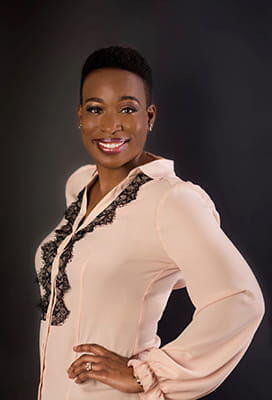
Shortly after graduating college, Dr. Tiffany Coleman joined the U.S. Army and worked as an operating room technician. During her nine years of service, she found her interest moving toward preventative health. She was intrigued by the underlying causes of unhealthy behaviors and diseases. In particular, a specific health issue her “battle buddies” fought with piqued her interest. Several of her African-American male colleagues were struggling with mental health issues.
“When I realized they were dealing with this problem, I was motivated to research how to make it easier for people of color to talk about mental health and feel liberated, not ashamed, when they do,” says Dr. Tiffany Coleman, a Walden Master of Public Health (MPH) and PhD of Public Health graduate.
African Americans are 20 percent more likely to suffer serious psychological distress than Caucasians, according to the U.S. Health and Human Services’ National Institute on Minority Health and Health Disparities. Moreover, less than half of all Americans with mental health disorders get the treatment that they need. The proportion of African Americans who get mental health treatment is only half that of Caucasian counterparts.
As Dr. Coleman pursued her doctorate, she found multiple studies on depression but few that delved into help-seeking behaviors and the breakdown between African-American men and mental health support.
“We all know that mental health disorders can affect any demographic,” says Dr. Coleman. “I found in my research that the severity of mental health illnesses is significantly greater for African Americans, and men in that population are less likely to seek help due to many barriers and unmet needs. This can include the fear of being misunderstood, the guilt of being a burden, socioeconomic factors, racism, inadequate health insurance and mental health care, exposure to violence and stigma, and more.”
Using her skills in preventative health, she found a lack of health literacy to be a main issue. To get treatment, individuals need to know the symptoms of mental illness and seek help for the problem.
“It was challenging because, in the African-American community, people are often not aware of what a mental health condition is and what the physiological causes or responses are,” explains Dr. Coleman. “If you educate yourself about the signs and symptoms, you may get that ‘a-ha moment’ and realize you need to seek help or talk to someone.”
Her doctoral study, “Help-Seeking Experiences of African-American Men With Depression,” found they may not obtain help because they see the issue as an affront to their masculinity, among other issues. Her research showed African-American men will often cover up their problems, not talk about them or engage in unhealthy coping mechanisms such as substance abuse and other risky behaviors.
“If you’re reluctant to talk about it, you’re less likely to seek help for it,” says Dr. Coleman. “A lot of men didn’t want the shame or stigma associated with it in the African-American community. Men particularly believe a mental health condition is a personal weakness.”
To escalate this issue, Dr. Coleman believes it will require policy reform and ongoing research and dialogue across multiple platforms, including in the media and in workplaces, communities and faith-based organizations.
“Each entity will have to work together to drive home that it’s okay and valid to have feelings, to discuss those feelings and to seek help,” says Dr. Coleman. “We know the system is broken, but we’re trying to improve and implement sustainable policies, procedures and support systems at the local, state and national levels that will mitigate that. We’re trying to even the playing field, create continuity in care and make sure it’s culturally competent.”
Recently, Dr. Coleman took a big step forward by creating an Austin-based organization, Somewhere in the Dark, as a place to help connect those in need with mental health support. Her mission is to enrich the lives of men, women and children who suffer from mental health illnesses through education and empowerment to build awareness and break down stigmas and stereotypes.
“A lot of people don’t know what’s out there and what’s available. Mental health for the African-American man, woman and child is not pushed to the forefront, so my goal is to make it easier to get help.”
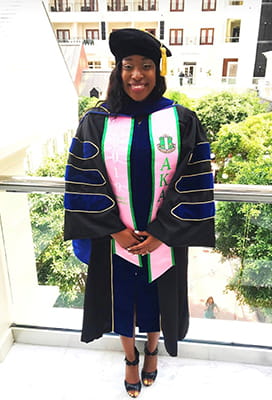
An elementary school teacher, Dr. Coleman wants to use her educator skills to create a comprehensive mental health program for people of color. She plans to leverage existing relationships with the United States Department of Veterans Affairs, the Department of Health and Human Services and other community and faith-based organizations to launch mental health fairs, provide resources, connect individuals with therapists and more.
Dr. Coleman credits Walden with providing the spark to be a proponent of social change, leading her to launch Somewhere in the Dark. It drove her to bring awareness to the issue and empower other individuals.
“If one person is successful, they’re going to talk about their success to someone else who may be struggling,” says Dr. Coleman “It can create a positive domino effect.”