


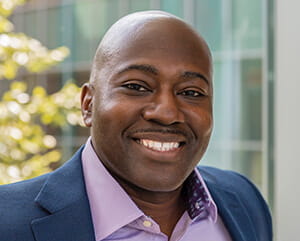
Jason Hanna, a PhD in Psychology student and MS in Psychology graduate, uses his passion for singing and experience in the military to examine the healing power of music to address post-traumatic stress disorder (PTSD).
In the United States, about eight million adults have post-traumatic stress disorder (PTSD) during a given year. The U.S. Department of Veterans Affairs' National Center for PTSD reports this is only a small portion of those who have gone through a trauma. PTSD occurs in people who have witnessed or experienced a traumatic event, which is why it is commonly associated with members of the military. This issue is a personal one for Sergeant First Class Jason Hanna, a Walden University PhD in Psychology student and MS in Psychology graduate.
“I know what I’ve seen in Afghanistan, and it can be pretty bad,” says Hanna, who has served as a combat medic in the United States Army.
Having a deep appreciation for the healing power of music, Hanna helped to create the musical group, Voices of Service. The group is a product of the Center for American Military Music Opportunities (CAMMO), which is driven, in part, to create music-based therapeutic programming and outlets for service members, veterans and family members. Voices of Service is composed of veteran and active military service members, including Master Sergeant Caleb Green, retired Staff Sergeant Ron Henry, Sergeant Major Christal Rheams and Sergeant First Class Hanna.
Having experienced war firsthand, the group’s members have seen fellow members of the military die in combat, become injured in warfare and return from war with PTSD. In a world where many people suppress their emotions and feelings, Hanna is proud of the part Voices of Service plays in helping people open up.
“Voices of Service allows us to tell our authentic stories to listeners and form a sense of camaraderie with them,” says Hanna. “We use that connection to encourage people to ask for help and understand it’s OK to not be OK.”

By hearing Voices of Service perform, hundreds of people have been inspired to seek professional treatment for PTSD or related issues. Voices of Service has performed at the Canadian Embassy, the American Legion Convention and, most recently, on NBC’s hit show, America’s Got Talent. In fact, they made it to the final round as one of the top five performing acts.
While competing on the show, the group heard from people all over the world, especially from members of the military. One letter that stuck out for Hanna was from a soldier in the Canadian military who was also a combat medic. The person wrote about how the music from Voices of Service touched a part of their soul and took them out of the darkness. This letter impacted Hanna deeply not only because, as medics, their experiences were similar, but this was the moment where he realized the work he was doing was impacting people in a real way.
“To hear that the work our group is doing is helping someone to get better and make strides to get help is humbling,” says Hanna. “I never dreamed it would have the impact it has had.”
Hanna’s background in psychology has helped him fuel his passion for healing through music. He believes the music and work of Voices of Service encourages people to open up about their mental health and, hopefully, seek treatment.
“Music can help people heal because it’s a universal language that allows people of all backgrounds to connect,” says Hanna. “Music can evoke a variety of emotions that leads to introspection, allowing people to begin their healing process.”
This work has led Hanna to pursue his PhD in Psychology at Walden, using his doctoral thesis to explore how families of military service members can use music as a method to heal from the trauma they are experiencing. By combining his passion for music and psychology, he believes he can find ways to improve and expand upon those skill sets in the doctoral program.
“Walden has served as a strong foundation for me to grow on,” says Hanna. “My education has given me the authority to speak about psychology in a scholarly way, which has opened a lot of doors for me.”