


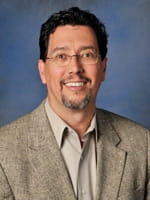
Dr. Bill Schulz
Since its founding in 1970, Walden University has been focused on fostering social change through the education of scholar-practitioners, increasing access to higher education, and preparing students and graduates to apply research that helps solve problems in the world. Throughout its nearly 50-year history, Walden has inspired and prepared more than 160,000 students and graduates to make a difference in more than 175 countries around the world.
Recently, Walden publicly renewed its vision of how the university can better foster social change through research, practice, and the education of motivated scholar-practitioners in Walden 2020: A Vision for Social Change. The working plan guides the university’s efforts to become a leader in connecting its virtual presence with both local and global actions to make a difference—and to be here for good. One part of that plan was creating the new Walden University Center for Social Change.
Spotlight on Walden caught up with Dr. William Schulz III (Bill), interim director of the Center for Social Change, to talk about what this means for the university now and in the future:
Spotlight on Walden: Congratulations on launching the new Center for Social Change! Why did Walden decide now was the right time to create a center?
As an institution of higher education that’s also a Certified B Corporation®, Walden is in a unique position. For so long, we’ve made a difference by preparing our community of learners to positively impact their careers and communities by systematically accessing knowledge, research, and best practices to help people. And now, it’s time to tie all these individual efforts together. The Center for Social Change isn’t a directive place to develop policy; rather, it’s a connective hub to foster networks to support research, practice, partnerships, and collaborations related to social change initiatives.
We’re also continuing to support our social change initiatives such as Global Days of Service, Scholars of Change video contests, service learning initiatives, and other related programs through the center, where we aim to connect Walden students, alumni, faculty, staff, and other university stakeholders with one another as well as facilitate relationships and partnerships outside of Walden. Though social change starts with an individual, through this collective, collaborative approach we hope to effect more positive social change en masse.
How do you see the Center for Social Change moving forward?
We announced our inaugural class of Social Change Fellows, who have received funding to carry out projects with a demonstrable social change impact, will present their research outcomes to the university community, and will serve in an advisory capacity to the president on advancing the university mission. This will produce exciting and purposeful research, and the center will identify ways to financially support both research and practice projects. We want to build research capacity and areas of focus related to social change that Walden can be known for around the world.
We’re also working on strengthening the impact of Walden’s curricula with respect to helping students, employers, and prospective students and partners explicitly see knowledge, skills, and values gained to effect positive social change. A faculty task force performed a close review of the research literature and model programs in higher education, and conducted interviews of students, faculty, and alumni. With information drawn from this exercise, the task force suggested eight features that should be woven into the curriculum: scholarship, systemic thinking, reflection, practice, advocacy, collaboration, political or civic engagement, and ethics and values. Moving forward, even though each discipline is different, every program will be able to show and link how it helps our students build these eight skill sets needed to be effective social change agents while meeting program learning outcomes.
How can members of the Walden community get more involved?
I hope people read the Walden 2020 report and share via Our Community what kind of work they’re doing and where, what relationships they have, and what opportunities and needs exist to continue our mission. I want people who are listening carefully to what’s happening in the world to bring ideas to the table of ways to work toward, advocate for, and engage with community partners who can’t do it all for themselves. Essentially, we are connecting the dots between service and learning in hopes to bring experienced and impassionate professionals together from all over the world to advance social change.