


Craig Kielburger, who co-founded Free the Children, Me to We, and We Day, with his brother Marc, shares how you can integrate service and volunteerism into your daily life.
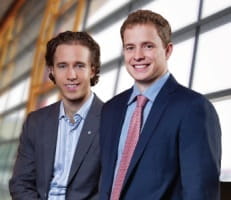
Craig (left) and Marc (right) Kielburger founded Free the Children, Me to We, and We Day. Photo credit: Brad Newton.
Service should be so innate that you have a special term for it. A “minga” is the term Craig and Marc Kielburger use to describe when communities gather to complete a large task in a short amount of time to benefit everyone in the community. It’s considered a social responsibility. That is the essence of the mission of Free The Children, which was founded in Canada more than 17 years ago by the brothers, who have created programming and building projects in more than 45 countries, built more than 650 international schools and school rooms, and sent $16 million worth of medical supplies around the world. Before their rousing plenary speech at the residency in Atlanta, Craig sat down to talk about their mission and how you can apply the same principles to your life.
WHY DID YOU TRAVEL TO SOUTHEAST ASIA IN 1995?
CRAIG I read a newspaper story on child slavery that inspired me to go to my class and seek their help. Over the summer months, this group of seventh-graders held car washes and bake sales and bottle drives—every type of fundraiser you could imagine. In September, when I was just starting the eighth grade, I realized this wasn’t a passing phase. I’d set up this fledgling group, this tiny charity, wanting to help, so I sat down with my parents. I had it all planned out. I asked if I could take two months off school and travel through Southeast Asia. Of course they said no, but I persisted. Eventually they allowed me to make that trip with a chaperone. That trip changed my life.
WHAT DID YOU TAKE AWAY FROM YOUR EXPERIENCES IN SOUTHEAST ASIA?
CRAIG I was shocked that slavery still existed. I had learned about the Underground Railroad to Canada, something in history. But there are 27 million slaves in our world today. The more I learned, the more I realized how little people knew. I wanted to meet these kids and bring their stories back to other young people. I wanted to raise awareness. The trip ranged from literally going to brick kilns where entire families were working sometimes for generations to pay off debts to visiting kids who had worked in the sex trade. Children were literally marching through the streets protesting child labor. It was a shock to see this reality. Bringing those stories home inspired the work we do.
WHY WERE YOU MOVED TO ESTABLISH FREE THE CHILDREN WHEN YOU RETURNED HOME?
CRAIG When we first started Free The Children, we never set out to start a charity. The first thing we did was call a well-known group and say, “We want to help.” There was a lot of confusion. One group actually said, “Well, if you want to help, do you know where your parents keep their credit card?” That was the attitude. That’s where Free The Children’s two-part mission came from: On one hand, yes, it’s freeing children from slavery and poverty, but on the other hand, it’s also freeing kids from the idea they’re too young to make a difference.
WHY ARE “ME TO WE” AND “WE DAY” SO NOVEL?
CRAIG We talk about freeing children to fulfill their potential. The challenge was the fact that this was so new. There was always something in college and university you could get involved with, but elementary school kids? Middle school kids? Having people calling upon them to get involved was novel. This was the first time someone ever said to them, “You’re 10. You can make a difference.” It spread like wildfire. Now we have one of the largest causes on Facebook in the world. One hundred thousand kids attend We Days every year: Massive stadiums full of youth who earn their way in through volunteerism.
WHAT WORDS OF WISDOM WOULD YOU SHARE WITH OUR ALUMNI WHO BALANCE FAMILIES AND CAREERS TO HELP THEM MEET THEIR OWN GOALS FOR SOCIAL CHANGE?
CRAIG I know how they feel. I did an executive MBA. It was designed so that you continue your work while pursuing your studies. I can appreciate that it is not easy. It’s a challenge. We try to make it as easy as possible to make a difference in the world. You will never win the quantity race when it comes to time with your kids. But you can certainly win the quality race and have the most meaningful experiences with your families. Carve out a summer to volunteer with your kids. Take a look at an international service trip.
MANY OF OUR ALUMNI DEVELOPED LASTING FRIENDSHIPS IN THEIR PROGRAMS. WHAT DO YOU RECOMMEND THEY DO TO STAY IN TOUCH?
CRAIG My classmates were split between three countries. We became the closest group of friends, which is extraordinary because we are very diverse. The greatest advantage of the program was the connections that I made with others. You form such great bonds. One common interest was service. We sought out experiences that built these great friendships. Find a common bond. It doesn’t have to be academic. In our case it was service. The best thing I walked away from the program with was lifelong friends.
HOW HAS YOUR WORK CHANGED HOW YOU AND PEOPLE AROUND THE WORLD VIEW VOLUNTEERISM AND CHARITY?
CRAIG Before, I might have volunteered on an occasional Saturday afternoon or written a check at tax time. Today, I make daily lifestyle choices: How I shop, the career I pick, how I give my time, how I live my life. When I look at Walden's mission, it’s intertwined with social change and a higher purpose. I love that idea. It shows that change in the world is also in your education. It’s also in your career path. Hopefully, it will also be how you shop, how you vote, and the type of life you live. As an individual, you have the ability to make the world a better place every single day. Seize that opportunity.
Find your passion to volunteer—or discover new opportunities—by visiting www.WaldenU.edu/servicenetwork.