


Barbara Hunter
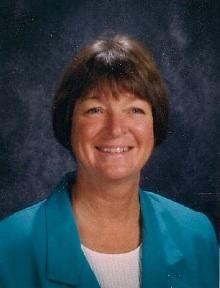
Dr. Barbara Mayhall Hunter has always been interested in the skills and strategies needed for comprehending expository (nonfiction) text, especially for struggling readers in grades 4-12 and adult education for the past five decades. Her dissertation, completed for her Ph.D. degree at the University of Illinois at Champaign-Urbana, Center for the Study of Reading, focused on effective visual displays (maps, graphs, charts, diagrams, illustrations, and photographs) and how they embellish, supplement, or even replace, expository text. In addition, she has presented scores of workshops, and papers at national and international conferences on the subject of the quality of text that students must read, and how students can use strategies to enhance comprehension if the textbooks are poorly written and/or if the students, themselves, are struggling readers. She also is a certified by the National Board of Professional Teaching Standards in Early Adolescence-English language arts, and licensed by the state of Minnesota in secondary English 6-12, elementary K-6, remedial reading K-7, secondary remedial and developmental reading 7-12, curriculum coordinator K-12, and elementary and secondary principal.
She has taught in K-12 public schools in multicultural settings for 15 years years in the Caribbean as well as 20 years in a large urban district in St. Paul, Minnesota, where over 70 different languages are spoken throughout the school district. She has also taught in higher education for 12 years in undergraduate and graduate teacher education programs, specializing in both elementary and secondary remedial, developmental, and advanced reading instruction. As a curriculum coordinator and literacy coach, she was able to work with many teaches, principals, and students in such areas as literacy, gifted and talented education, multicultural education and technology. She also worked closely with parent involvement initiatives.
Dr. Hunter has also lived overseas for more than half of her life, in Japan, Germany, the Caribbean and is a frequent international traveler. Therefore, another area of expertise is her knowledge of multicultural literature for children and young adults. She has published several articles on this topic and remains current in the field.
A third area of expertise is her quest to determine the effective use of technology in literacy education. She designed the original software for a technology-based K-3 reading program (Sylvan). She is also particularly interested on building vocabulary knowledge through the use of the tools of technology, including websites that explore Latin and Greek roots and affixes. Her research on English-Spanish cognates for middle school science education was presented at the World Congress on Reading in 2010 in Auckland, New Zealand, and she is continuing this research at present.
Dr. Hunter also has extensive knowledge and experience in the area of the assessment of vocabulary and reading comprehension. At present, she serves as an educational consultant for the Minnesota Department of Education, where she reviews standardized state reading tests for passage quality, item construction, and cultural bias. She serves as a scorer for district and state writing tests in Minnesota and for Data Recognition Corp. Other academic and research interests include writing instruction and assessment, gifted and talented education, language development in young children, international and national reading assessments, content area reading strategies in science, social studies, mathematics and vocational/technical education, online learning, and adult education.
As Contributing Faculty, she enjoys seeing Walden University's graduate students through their coursework in literacy and through their final studies as they succeed in achieving their advanced degrees. She is currently mentoring doctoral candidates as they complete their studies and teaching a course on collaboration skills and strategies among teachers and administrators as they promote strategies for developing vocabulary and reading comprehension in the content areas.
Courses Taught
EDDD 8062 - Collaborative Approach to Literacy
EDUC 8090-165/ 8090-565 - Doctoral Study Intensive
Education
PhD, U of Illinois
MA, University of the Virgin Islands, St. Thomas
Public Service
Florida Fish and Wildlife, National Wildlife Refuge Volunteer, Volunteer - Crystal River
Awards / Honors
Recipient, Fourth Annual Dissertation Research Awa, American Association of Publishers, 1986
National Board Certification, English Language Art, , 2010
Presentations
Bagley, C., Hunter, B. M. (1995). The Shared-Ownership Technology Model: Restructuring the Classroom.