


Nearly one in five U.S. children ages 6 to 19 is obese.1 This is three times higher than the rates in the 1970s, leaving many scientists and public health professionals scrambling to determine what kind of impact this increasing obesity is having on our children.
So far, the news isn’t good. In addition to myriad physical health issues, obesity appears to be negatively affecting the development of children’s minds. That’s why, for public health professionals, childhood obesity is a serious concern on a local, national, and world health scale.
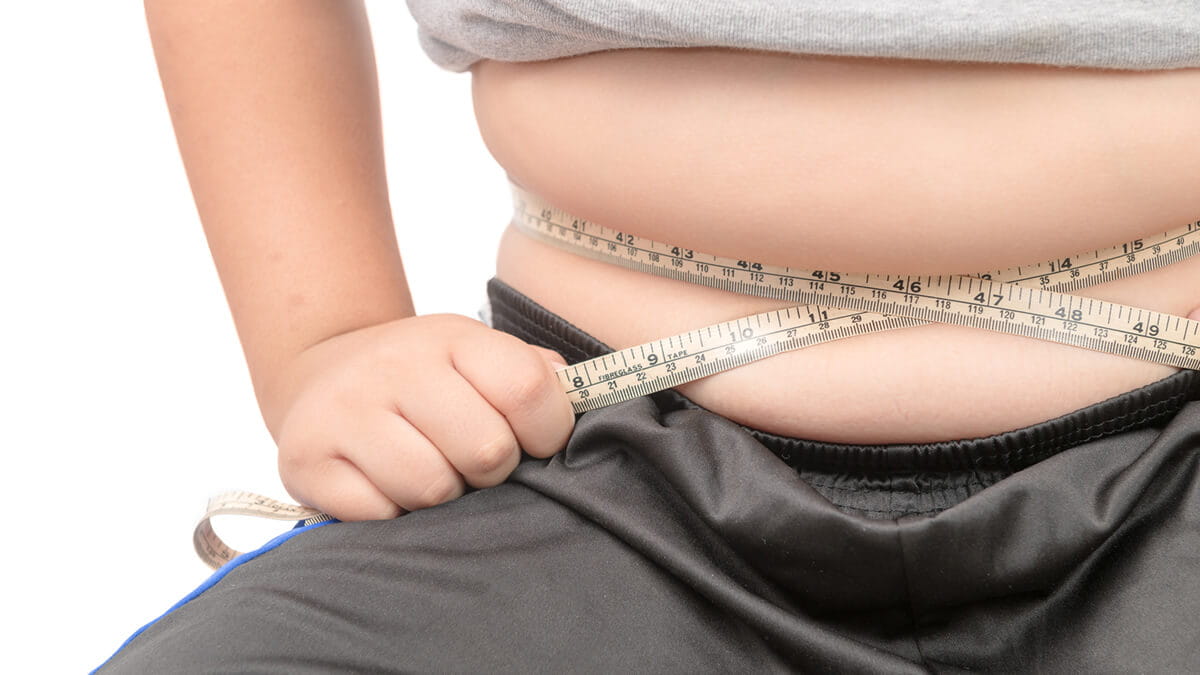
What Is Obesity, Exactly?
Obesity is having too much excess fat. While specialized equipment can pinpoint a person’s exact body fat percentage, many health professionals use the Body Mass Index (BMI) scale, which is a simple formula that compares weight to height. The higher the BMI, the more fat people typically carry. Children with BMIs in the top percentiles for their age are considered obese.
What Causes Childhood Obesity?
There are three main contributors to childhood obesity: genetics, behavior, and community environment.2 Some children are simply predisposed to carry excess fat due to their genetics. But most overweight children engage in poor health behaviors, such as eating too much high-calorie, low-nutrient food and not participating in enough physical activity. For these children, better diets and more physical activity can help eliminate their obesity. For children in certain community environments, however, nutritious food and space for physical activity can be hard to come by. In these situations, improving access to good food and increasing opportunities for physical activity typically require community members, government agencies, and nonprofit organizations to work together to change the community environment.
How Does Childhood Obesity Affect Developing Brains?
A recent study in the journal Obesity found significant links between obesity in early life and lower IQ, lower perceptual reasoning, and lower working memory scores.3 That means obesity can stunt a child’s cognitive abilities and reduce their executive functions, which help regulate thoughts, emotions, and goal-directed behaviors.
Other studies have found similar results, including one that found that children who eat more saturated fat, regardless of whether or not the child is obese, perform worse on tests that measure the ability to discern and remember the relationships between things.4 Based on these studies, it seems clear that obesity, and fat in general, has a negative impact on developing brains. What’s less clear is why.
Some scientists theorize that biological mechanisms are at play, including fat-caused systematic inflammation of brain regions3 as well as structural changes to the orbitofrontal and anterior cingulate cortices, less white matter integrity, and reduced hippocampal volume.4 However, there may be additional factors at play, which is why research is ongoing.
How Can You Help Decrease Childhood Obesity?
One of the most effective ways to decrease childhood obesity is to educate people about its causes and effects, and provide them with the knowledge they need to change behaviors. Numerous public health jobs—from those in local health departments to those in global health education programs—include health education. But if you want to join any of these efforts as a professional health educator, you’ll first want to specialize with an MS in Health Education and Promotion.
What is health education and promotion? It’s a specialized field that brings together education knowledge—like what you could learn with a higher education degree—with health knowledge and communication knowledge. Those with careers in health education and promotion design health communications: plan, implement, and evaluate prevention programs: and/or serve as an educator on public health issues in a variety of settings.
Not only is health education and promotion a much-needed specialty, it’s also increasingly sought after. Between 2020 and 2030, employment for health educators is expected to increase by 17%, a rate that’s much faster than average.5 And thanks to online education, you can get the health education and promotion degree you need to take full advantage of job opportunities. When you earn your master’s in health education and promotion online, you’ll be able to complete your coursework from home. And an online master’s in health education and promotion will let you choose when in the day you attend class, making it possible to continue working full time while you earn your degree.
Childhood obesity is a serious problem, but with an online MS in Health Education and Promotion, you can help fight it.
Walden University is an accredited institution offering an MS in Health Education and Promotion degree program online. Expand your career options and earn your degree using a convenient, flexible learning platform that fits your busy life.
1Source: https://www.cdc.gov/obesity/data/childhood.html
2Source: www.cdc.gov/obesity/childhood/causes.html
3Source: www.futurity.org/childhood-obesity-iq-memory-cognition-1766392
4Source: www.apa.org/monitor/2016/06/obesity-brain.aspx
5Source: www.bls.gov/ooh/community-and-social-service/health-educators.htm
Walden University is accredited by The Higher Learning Commission, www.hlcommission.org.